

Few cars reward the driver the way a classic Porsche 911 does, and few ask as much of the seat. The cockpit is compact, the driving position is fixed by decades-old design, and the car will happily corner harder than its original seats were ever built to support. For owners who drive their 911 rather than simply keep it, the seat is often the first thing that falls short. Here is how to choose Porsche 911 seats for every air-cooled generation, from the F-Body to the 993, and the newer water cooled 996.
What a 911 Asks of a Seat
A seat for a classic 911 has to do three things at once. It has to fit a cockpit where every inch of legroom is already spoken for. It has to hold the driver through the corner, not merely sit beneath them. And it has to look as though it belongs, because in a car like this, it should.

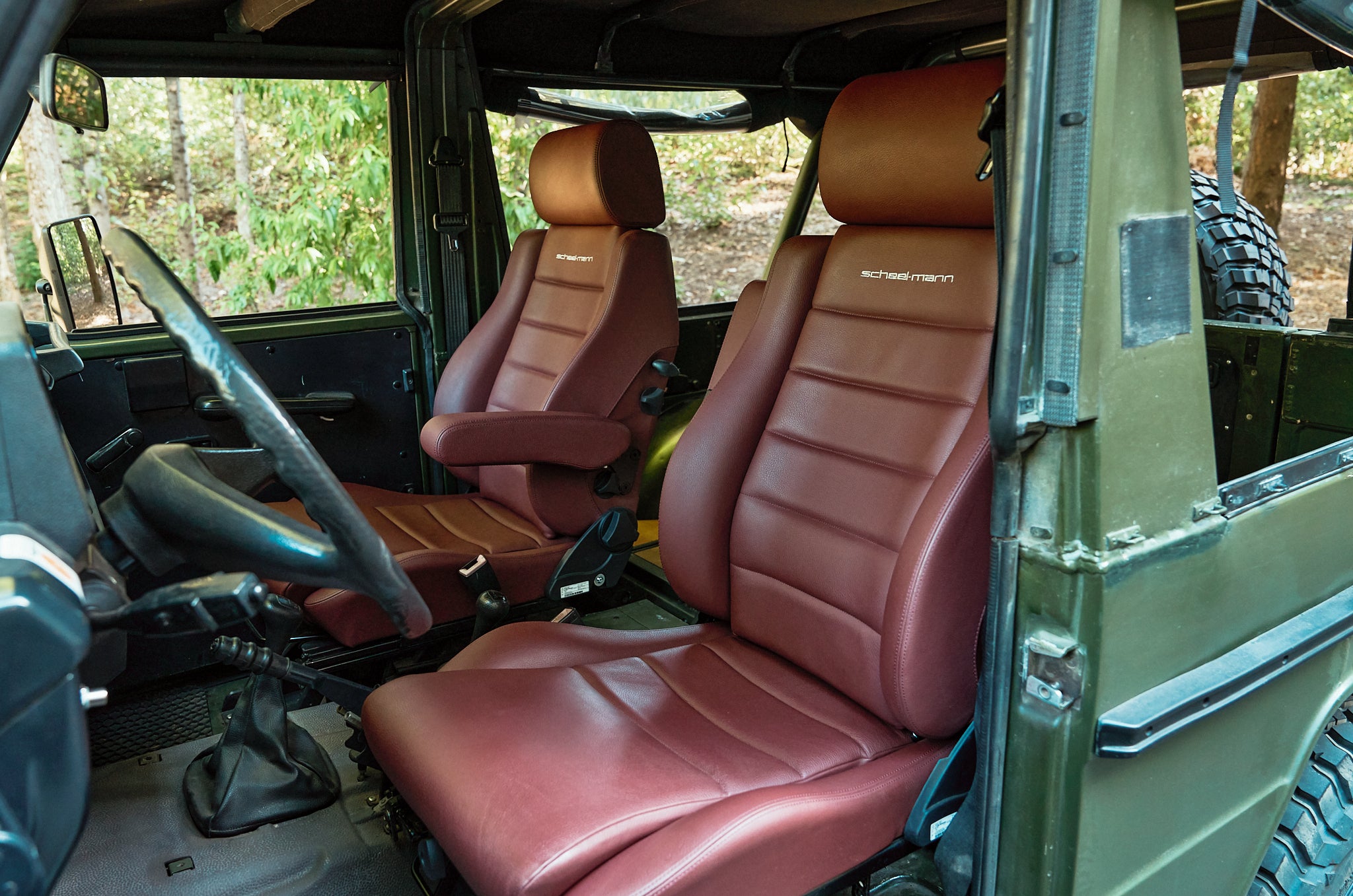
Since 1966, scheel seats have done exactly that. The marque began on the racetrack, building bucket seats for competition cars, and went on to become original equipment in coupes such as the Alpina 3.0 CSL and the Ford Capri RS. A classic 911 is the kind of car these seats were made for.
Three Seats for the 911
scheel 101
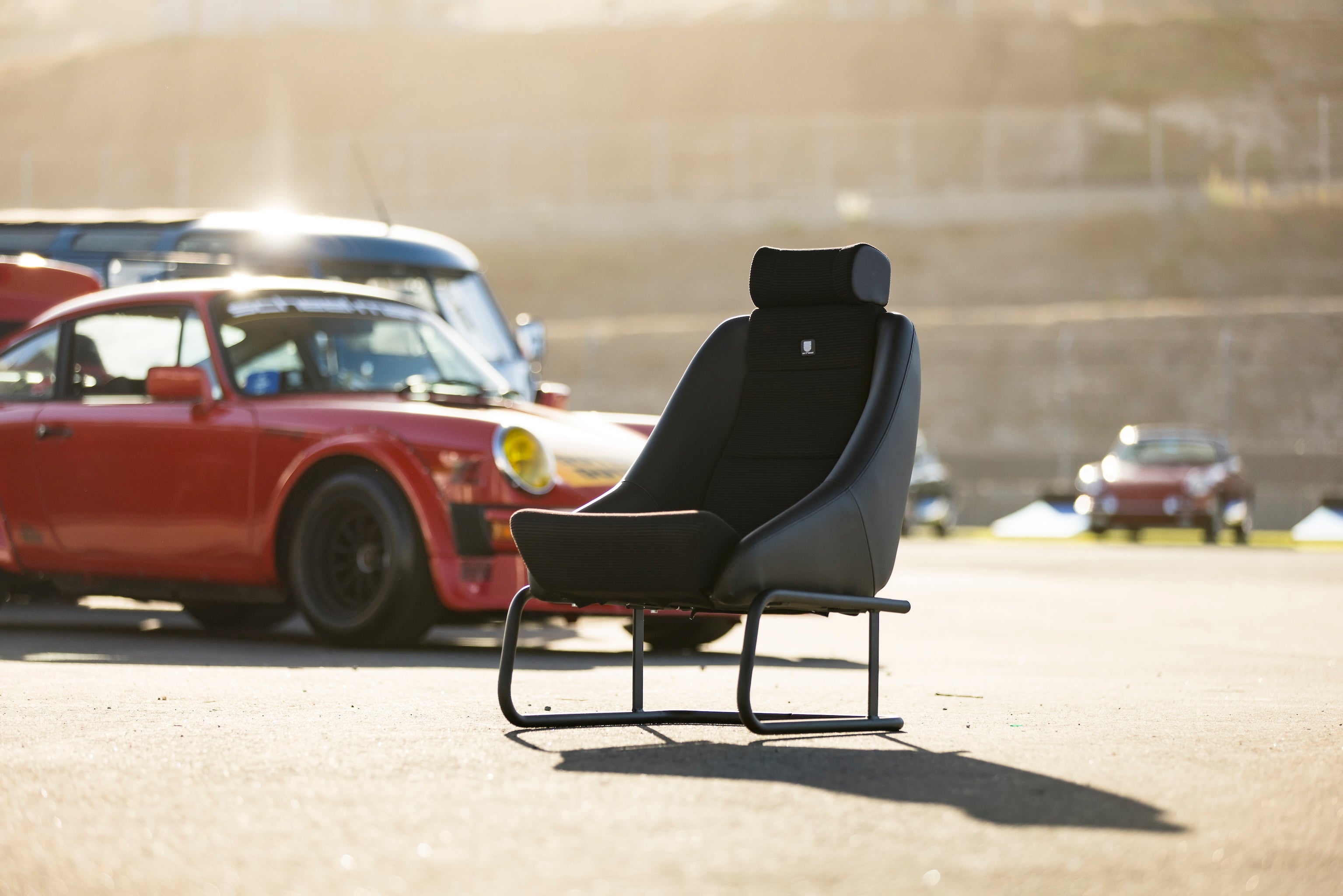
For owners to whom originality matters, the scheel 101 is the natural choice, and it has history in the 911 itself. When Porsche built the lightweight 911 S (ST) between 1969 and 1972, it fitted scheel bucket seats with harness belts. The scheel 101 carries the shape of the 1966 original forward as a German-made, period-correct sport seat. Its upholstery is inspired by the scheel perlon corduroy of the Alpina 3.0 CSL, and beneath the period look sit details made for driving: an adjustable-length thigh cushion, adjustable backrest inclination, and a suspension-mounted bottom cushion that isolates road vibration. Lap belt mounting points are integrated into the frame, and the headrest can be fitted or left off.


Sportline R
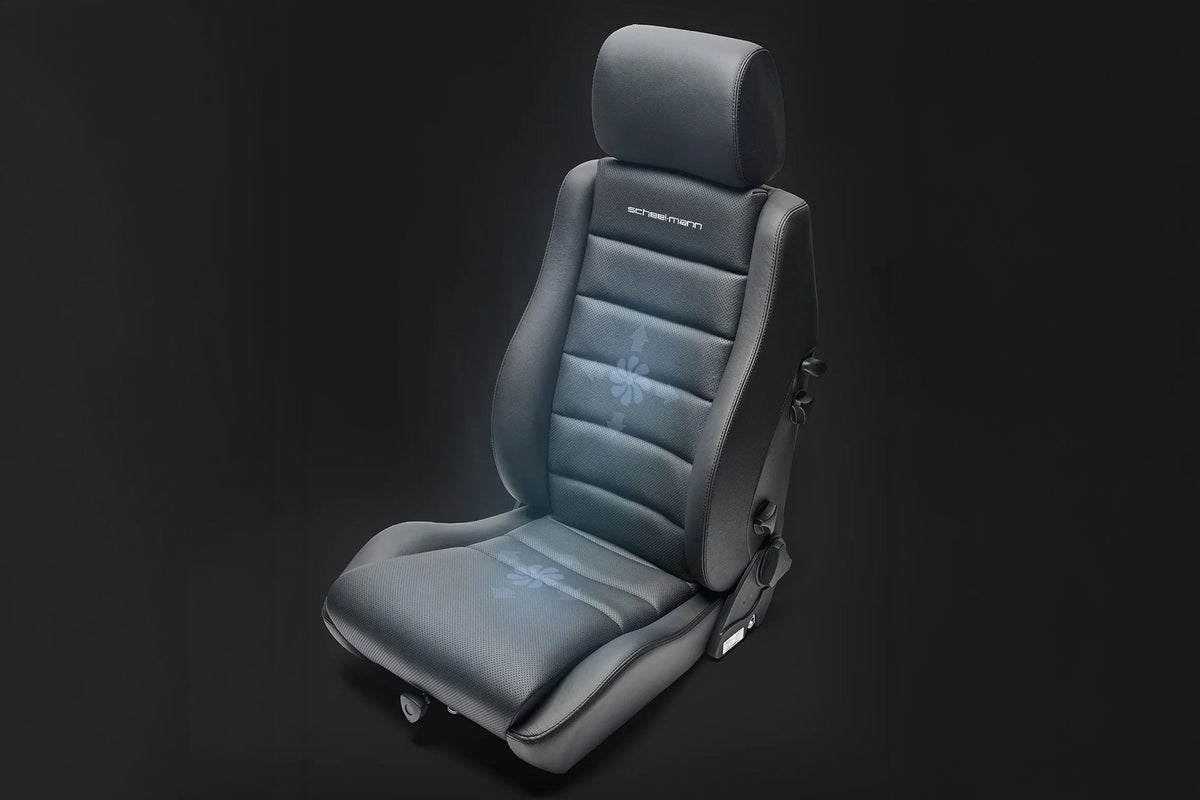
The Sportline R is built on our most compact seat, made for exactly the kind of cockpit a 911 has. It forgoes 4-way adjustable lumbar support, a deliberate trade that cuts two inches from the seatback and lets the driver sit nearly two inches further back in the car. For taller drivers in an early 911, that space can make all the difference. The Sportline R adds raised side bolsters through the thigh area, the deepest we offer, and comes with a choice of round or square headrest.


Traveler R
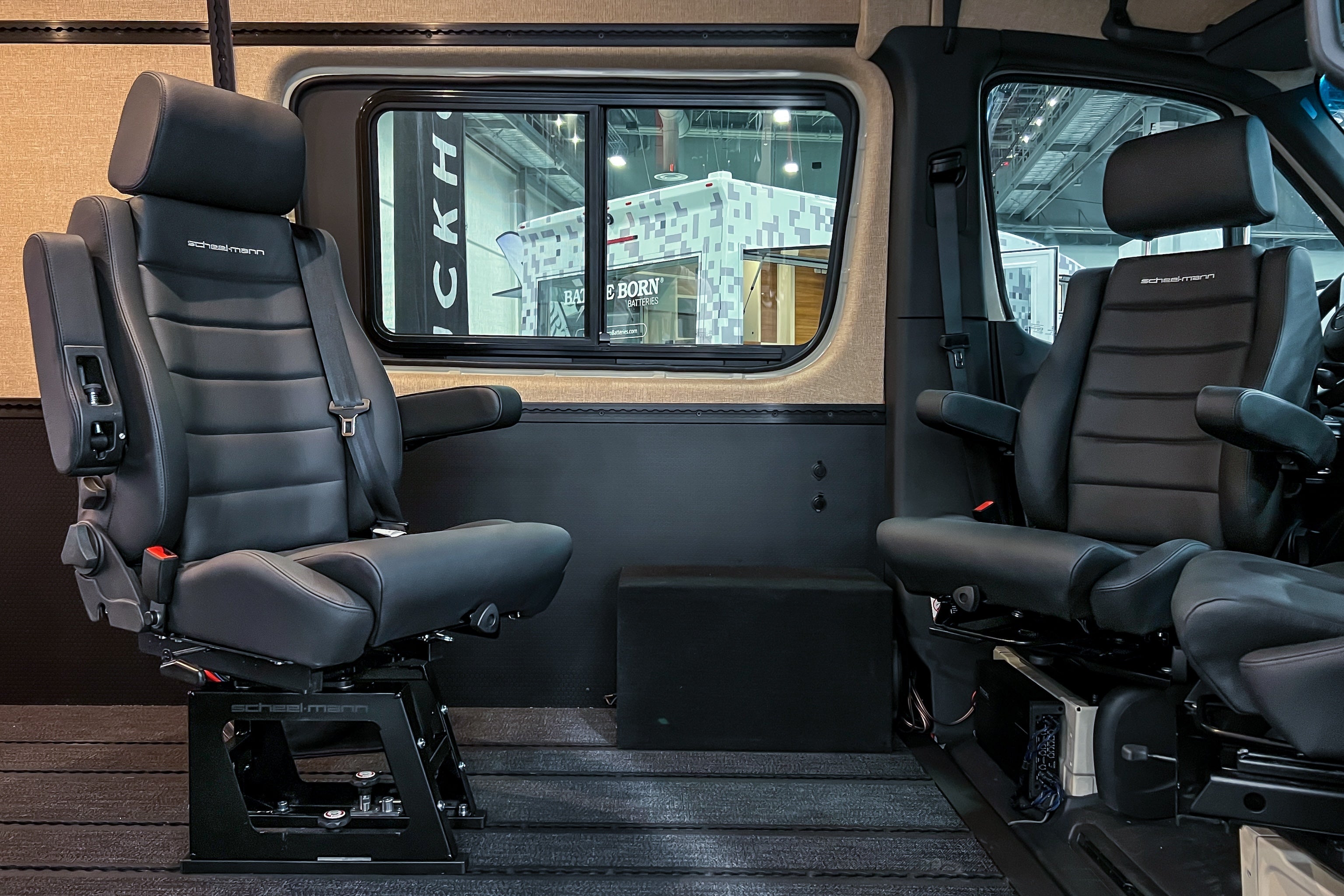
For the 911 that covers real distance, from long tours to the occasional rally, the Traveler R pairs our deepest seat-base bolsters with tunable orthopedic lumbar support. It holds the driver firmly through every corner while keeping the lower back supported mile after mile: the seat for a 911 that is driven far, and often.


Fitting Your 911, Generation by Generation
Every scheel-mann seat mounts on a seat bracket adapter kit made for a specific generation of 911, adapting the factory floor bolt pattern so the seat sits as though it came with the car. Kits are available for:
- The F-Body 911 (1963–1973)
- The early G-Body 911 (1973–1983)
- The late G-Body 911 (1984–1989)
- The 964 (1989–1994)
- The 993 (1994–1998)
- The 996 (1998–2004)
- The 997 (2005–2011)
- The 991 (2012–2018)
- The 992 (2019–present)
Each kit is laser cut and brake formed from 3/16" steel, then hand welded. Seat installation affects your car's safety systems, so we recommend having the work carried out or checked by a qualified installer.

Seats for the Porsche 993
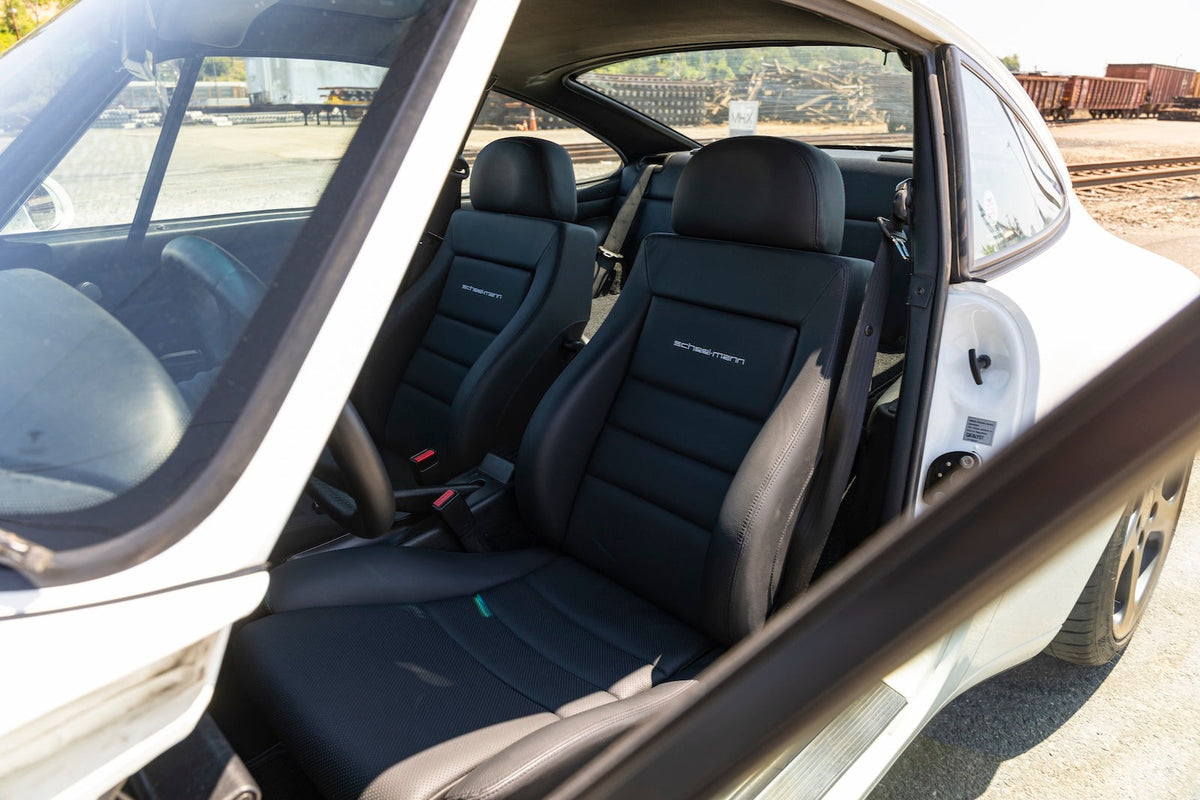
The 993 holds a particular place among 911s: the last of the air-cooled cars, and for many owners the finest balance of classic character and modern usability. It is also a car that gets driven, often far and often hard, which makes the seat matter all the more. With the 993, Porsche began to offer an all wheel drive variant, thus making the interior space for seating a bit tighter. We developed a special seat adjustment knob that fits in the tighter cockpit of this generation of 911's, making seat adjustments much easier.
The 993's dedicated bracket kit accepts any of the three seats above. Owners who tour tend to favor the Traveler R for its lumbar support on long days; those who want the most room in the cockpit choose the Sportline R. For a closer look at a finished car, see the Porsche 993 in our project gallery.

Seats for the Porsche 996
The 996 (1998–2004) was the first water-cooled 911, and for many owners it has become the most approachable way into the car: a 911 that can be driven every day and enjoyed hard on the weekend. The cabin is more modern than in the air-cooled cars, but the question is the same as it ever was: whether the seat holds the driver as well as the car holds the road.
When it comes to choosing a seat, the 996 is much like the 964: the same balance of cockpit room, support through the corner and comfort over distance decides it, and the guidance below applies just as well. To confirm which of our seats best suits your 996, get in touch and we will talk it through.
With the 996, Porsche also standardized the way the 911’s seats mount to the floor, and every water-cooled generation since, the 997, 991 and current 992, has kept the same mounting pattern. That is why one bracket kit fits every water-cooled 911, from the 996 to the car in showrooms today.

Choosing Between Them
If originality comes first, choose the scheel 101. If cockpit space is the priority, especially for taller drivers, choose the Sportline R. And if your 911 covers long distances, choose the Traveler R. Whichever you choose, every seat is hand-built in Germany and made to be adjusted once and enjoyed for years.
Find the Right Seat for Your 911
Every 911 is different, and so is every driver. If you have a particular fabric in mind, we can build your seat to order in the upholstery of your choice; see our Built to Order seating. Either way, to talk through the right seat for your car, call 503-395-4087 or email info@scheel-mann.com.
Guter Sitz, gute Fahrt (good seat, good ride).


Leave a comment
This site is protected by hCaptcha and the hCaptcha Privacy Policy and Terms of Service apply.